
🔋
Project 01
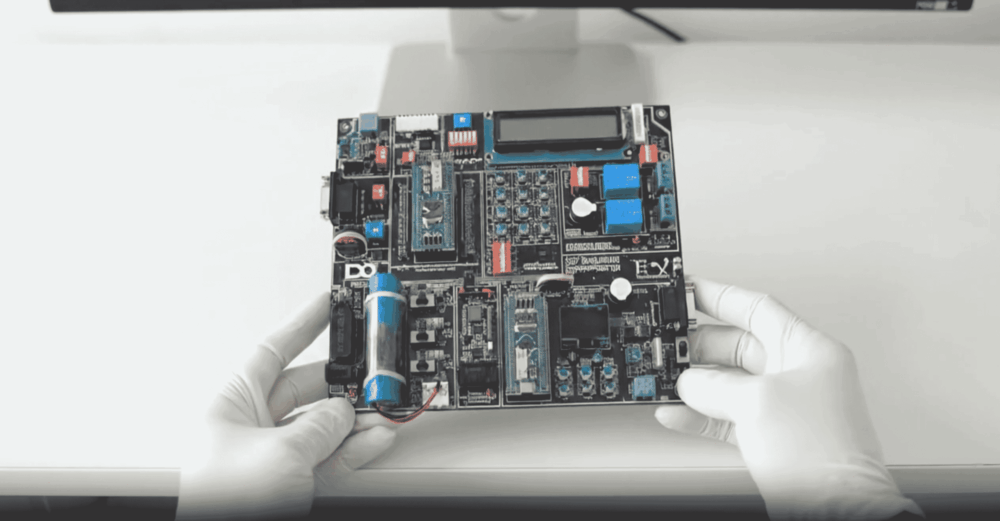
Design a Complete Battery Management System
End-to-end BMS design — cell-monitoring IC selection, balancing strategy, SoC/SoH algorithm, fault diagnostics. Defended in a panel review on the cohort's final week.
Certification Course in AUTOSAR for EVs: Standards & Software Architecture


Course Curriculum
Certification Course in AUTOSAR for EVs: Standards & Software Architecture
Topic 1: Starting with EV Technology
text
Topic 2: Understanding ICE to EV Transition
text
Topic 3: Electric Vehicle Engineering
text
Topic 4: Battery Technology for EV Systems
text
Topic 5: Power electronics for EV systems
text
Topic 6: Motor Systems for Electric Vehicles
text
Topic 7: Vehicle Electrification Systems
text
Topic 8: Electric Vehicle Charging Technology
text
Topic 1: AUTOSAR Course Overview
text
Topic 2: Course Guidelines & Preliminary Overview
video
Topic 3: Mechanical-Centric Vehicles to SDV Transition – Part 1
video
Topic 4: Mechanical-Centric Vehicles to SDV Transition – Part 2
video
Topic 5: Shift Towards Electronics & Automation – Part 1
video
Topic 5: Shift Towards Electronics & Automation – Part 2
video
Topic 6: Shift Towards Electronics & Automation – Part 3
video
Topic 7: The Software-Defined Vehicle Era – Part 1
video
Topic 8: The Software-Defined Vehicle Era – Part 2
video
Topic 9: Rising Complexity in Automotive Systems Part 1– ECU Integration
video
Topic 10: Rising Complexity in Automotive Systems Part 2 – Communication Protocols
video
Topic 11: Engineering Challenges in Software-Defined Vehicles (SDVs)
video
Topic 12: Introduction to AUTOSAR Part 1 – Role of Standards & Frameworks
video
Topic 13: Introduction to AUTOSAR Part 2 - Understanding AUTOSAR Layered Architecture
video
Topic 14: Introduction to AUTOSAR Part 3 - Layered Architecture
video
Topic 1: Overview of the AUTOSAR Base Software
text
Topic 2: Introduction to BSW Modules - Services Layer & ECU Abstraction Layer
text
Topic 3: AUTOSAR Layered Architecture - Communication Stack and Interface Abstractions & Standardized APIs
text
Topic 1: Software Components & their Roles - Atomic & Composite Software Components
text
Topic 1: Port-Level Interface Definitions in AUTOSAR
text
Topic 2: Sender-Receiver (SR) Communication Model - Data Exchange Principles
text
Topic 3: Client-Server (CS) Interface - Service-Oriented Communication
text
Topic 4: Connectors & Port Compositions
text
Topic 5: Practical Examples - Port-to-Port Communication Scenarios
text
Topic 1: Runnables in AUTOSAR - Execution Entities of SWCs
text
Topic 2: Events Triggering Execution - Time Events, Mode Switch Events, Operation Invocations
text
Topic 1: ASW Layer Overview - Functional Layer Design & Mapping Functionalities into SWCs
text
Topic 1: Introduction to RTE Layer - Role as Middlewre between SWC & BSW
text
Topic 2: Sender-Receiver RTE Communication
text
Topic 3: Client-Server RTE Communication
text
Topic 4: End-to-End Communication Flow using RTE
text
Topic 5: Event Scheduling and Triggering via RTE
text
Topic 1: Engineering Approach in AUTOSAR - Top Down vs Bottom Down Development
text
Topic 2: AUTOSAR Methodology Workflow - System Design, Configuration, Integration
text
Topic 3: Real-World Examples - Lifecycle of Component Development
text
Topic 1: Recap of Key Concepts
text
Topic 2: Evaluation and Feedback
text
Topic 3: Career Pathways in AUTOSAR- OEMs, Tier-1 Suppliers, Tool Vendors
text
Project: Development of an AUTOSAR-Compliant Software Architecture
assignment
Congratulations on Successfully Completing the Course!
text
Earn a certificate
Every completing learner receives a joint certificate signed by three accrediting bodies — ASDC (Government of India), AICTE NEAT, and IIT Jammu I3C. The certificate carries a public verification code recruiters can validate in seconds via emobility.careers.
System Requirements
Lightweight on hardware — most modern laptops handle it. Software is free / academic-licensed.
Associated Skills
DIY Projects Included
Every project is defended in front of an industry panel and graded by our mentors. Your portfolio after this course is what gets you the interview.
End-to-end BMS design — cell-monitoring IC selection, balancing strategy, SoC/SoH algorithm, fault diagnostics. Defended in a panel review on the cohort's final week.
Model a 2-wheeler / 4-wheeler powertrain from motor to wheels, run it through MIDC + WLTP drive cycles, and predict range against the spec sheet.
Assemble a Level-1 / Level-2 EVSE on a benchtop kit — CP/PP signalling, contactor + relay logic, Type-2 connector wiring, safety lockouts.
Course Benefits
Two audiences. Two angles. Pick the one that maps to where you are today.
What this course includes
Who can take this course?
Personalised Trainer Support
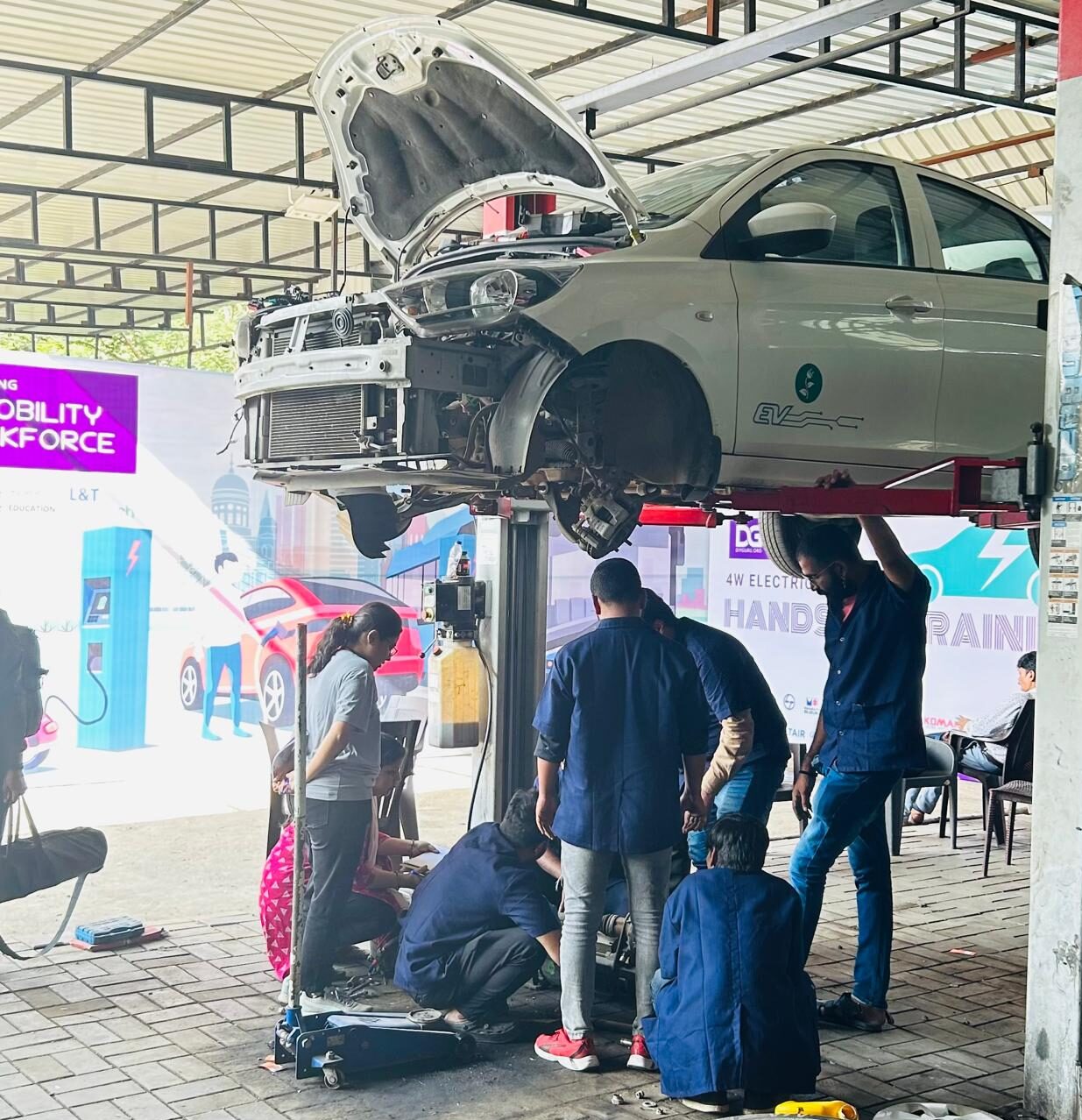
Every cohort is paired with a dedicated mentor — typically an IIT-trained EV practitioner with 6+ years of industry experience. Weekly 1:1 sessions, async doubt-clearing turnaround within 24 hours, project reviews before submission, and mock interviews tuned to the role you're targeting.
FAQ
Technical Expertise You Will Gain
Hardware competence is the differentiator. Each module pairs theory with a tooling-grounded exercise so your skill claims are demonstrably true at interview time.
Placement Network
Engineers from this course currently build at OEMs across India, Europe, North America and the Middle East.















The world's only EV-specific job network. 300+ hiring partners across India, Europe, North America and the Middle East.
Government-Certified · Industry-Endorsed · Learner-Approved
Automotive Skills Development Council — recognised by major OEMs worldwide.
National Educational Alliance for Technology — issued under AICTE's premium learning ecosystem.
Recognised by India's Ministry of Education + NSDC skilling framework — accepted globally.
Alumni Stories
Engineers from Mercedes-Benz, Cummins, Infineon, GM, Hydro One, John Deere and more.
The hardware-first approach made all the difference. Came in from a generalist electronics background; the BMS and motor-drive modules gave me concrete vocabulary I could carry into Infineon interviews.

Industry-grade depth without the academic ivory tower. The MATLAB Simulink + capstone defence prepared me for exactly the kind of cross-functional EV problems we solve at Cummins.

Started with electronics, walked into a BMS role in Germany. The applied projects + mentor reviews are what carried me through — the certifications opened the door, the depth got me hired.