
🔋
Project 01
Design a Complete Battery Management System
End-to-end BMS design — cell-monitoring IC selection, balancing strategy, SoC/SoH algorithm, fault diagnostics. Defended in a panel review on the cohort's final week.
The Advanced Powertrain for Electric Vehicles course is a comprehensive industry-oriented program designed to equip learners with in-depth knowledge of EV powertrain architecture, energy flow, modeling, and simulation. This course bridges the gap between mechanical, electrical, and electronic systems, giving you the m



Course Curriculum
The Advanced Powertrain for Electric Vehicles course is a comprehensive industry-oriented program designed to equip learners with in-depth knowledge of EV powertrain architecture, energy flow, modeling, and simulation.
Sign up at ev.care to access free learning materials!
text
Topic 1: Introduction to Electric Vehicles
video
Topic 2: EV Policies and Government Initiatives in India
video
Topic 3: EV System Configuration and Transition from Conventional Powertrain
video
Topic 4: EV Configurations & Propulsion Systems
video
Topic 5: EV Powertrain Components & DC Motor Fundamentals
video
Topic 6: Understanding BLDC, PMSM & Induction Motors for EVs
video
Topic 7: EV Motor Control & Circuitry: Understanding How Motors Are Managed
video
Topic 8: Battery Fundamentals for Electric Vehicles
video
Topic 9: EV Battery Pack Design & Components
video
Topic 10: Power Converters in Electric Vehicles
video
Topic 11: Understanding EV Charging: Ports, Onboard & DC Switching
video
Topic 1: Internal Combustion Engine (ICE) Powertrain Fundamentals
video
Topic 2: Electrified Powertrain Configurations
video
Topic 3: Types of HEV Architectures
video
Topic 1: Case Study: TATA Tiago EV & MG Comet – Component and Performance Comparison
video
Topic 2: Case Study: TATA Nexon EV & MG ZS EV – Parameter-wise Vehicle Comparison
video
Topic 1: Powertrain Nomenclature and Typical Power Ratings
video
Topic 2: Powertrain Thermal Management and Heat Dissipation
video
Topic 3: Powertrain Filtering and Power Conditioning Techniques
video
Topic 4: Noise Characterization & Considerations in Powertrain Systems
video
Topic 6: Voltage Conversion in Electric Powertrains
video
Topic 7: Voltage Regulator Topologies: Linear and Switching Regulators
video
Topic 5.1 Module Overview and Learning Objectives
video
Topic 5.2 Necessity of Emission Norms
video
Topic 5.3 Regulatory Bodies and Formulation of Emission Standards
video
Topic 5.4 Evolution and Implementation of BS6 Norms in India
video
Topic 5.5 History of Global and Indian Emission Standards
video
Topic 5.6 Gasoline Fuel Chemistry and Comparison of BS4, BS6, and Global Standards
video
Topic 5.7 Diesel Fuel Chemistry and Global Comparative Emission Standards
video
Topic 5.8 Major Automotive Pollutants and Their Permissible Limits
video
Topic 5.9 Technological Advancements in Emission Control Systems
video
Topic 5.10 Catalytic Converter Technologies
video
Topic 5.11 Overview of Engine Sensors and Actuators in Emission Systems
video
Topic 5.12 Air Intake and Boost Pressure Sensors – MAF, MAP, CAC, and Temperature Sensors
video
Topic 5.13 Exhaust Temperature and Pressure Sensing Mechanisms
video
Topic 5.14 EGR Position Sensors and Actuation Systems
video
Topic 5.15 Oxygen Sensors – Working, Construction, and Mixture Control
video
Topic 5.16 NOx Sensor Architecture and Functional Analysis
video
Topic 5.17 BS4 Engine Sensor Architecture and Integration
video
Topic 5.18 ECUECM and EMS2 System
video
Topic 5.19 Vehicle Electrical Harness Layout – Case Study Hyundai i10
video
Topic 5.20 On-Board Diagnostics (OBD) and Fault Detection Protocols (SAE, ISO, etc.)
video
Topic 5.21 Consumer Perspective on BS6 Transition
video
Topic 6.1: EV Modeling Part I – Vehicle Body, Axles, and Tire Parameterization in MATLAB–Simulink
video
Topic 6.2: EV Modeling Part II – Drivetrain, Motor Controller (H-Bridge) Configuration and Parameter Setup
video
Topic 6.3: EV Modeling Part III – Driver Model, Power Converter & SOC Subsystem
video
Topic 6.4: Powertrain Modeling Part I – System-Level Integration and Model Architecture
video
Topic 6.5: Powertrain Modeling Part II – Battery Modeling and SOC Estimation Techniques
video
Topic 6.6: Powertrain Modeling Part III – Complete Powertrain Simulation and Performance Analysis
video
Topic 1: 3D Modeling of Motor Shaft in SOLIDWORKS
video
Topic 2: Structural Analysis of Motor Shaft
video
Topic 3: 3D Modeling of Left Motor Mount
video
Topic 4: 3D Modeling of Right Motor Mount
video
Topic 5: Structural Analysis of Motor Mount Assemblies
video
Topic 6: 3D Modeling of Bearing Adaptor - I
video
Topic 7: 3D Modeling of Bearing Adaptor – Part II
video
Topic 8: Structural Analysis of Bearing Adaptor – Part III
video
Topic 9: Design Optimization of Driven Sprocket
video
Topic 10: Structural Analysis of Driving Sprocket
video
Topic 11: Structural Analysis of Driven Sprocket
video
Topic 12: 3D Modeling of Left Eccentric Mount
video
Topic 13: Structural Analysis of Left Eccentric Mount
video
Topic 14: 3D Modeling of Right Eccentric Mount
video
Topic 15: Structural Analysis of Right Eccentric Mount
video
Topic 16: 3D Modeling of Tripod Housing
video
Topic 17: Structural Analysis of Tripod Housing
video
Topic 18: 3D Modeling of Axle Shaft
video
Topic 19: Structural Analysis of Axle Shaft
video
Topic 20: 3D Modeling of Differential Mount
video
Topic 21: Structural Analysis of Differential Mount
video
Topic 22: 3D Modeling and Assembly of Differential System
video
Topic 1: Introduction to Battery Management System (BMS)
video
Topic 2: Block Diagram of BMS – Components and Functional
video
Topic 3: BMS Data Acquisition – Voltage, Temperature, and Current Measurement
video
Topic 4: Battery Monitoring Unit (BMU) – Architecture and Key Components
video
Topic 8.5: Battery Control Unit (BCU) – Functions, Inputs, and Protection Mechanisms
video
Topic 6: Cell Modeling and Simulation using MATLAB Simulink
video
Topic 7: BMS Modeling, Simulation, and Analysis using MATLAB Simulink
video
Topic 8: Powertrain Modeling and Simulation – BMS Integration Perspective
video
Topic 9: Complete Electric Vehicle Modeling and Simulation with BMS Integration
video
Topic 1: Introduction to Thermal Management
text
Topic 2: Components of Cooling System
text
Topic 3: Cooling System Maintenance and Repair
text
Topic 3: Understand Heat Load
text
Topic 4: Motor Heat Load Simulation
video
Topic 5: Controller Heat Load Simulation
video
Topic 6: Radiator Specification
text
Topic 7: Radiator Calculations
text
Topic 8: Design Flow
text
Topic 9: Errors and Failures in Cooling Systems
text
Topic 10: Twin Radiators
text
Topic 9: Testing
text
Topic 10: Case Study
text
Topic 11: Importance of Cooling System
text
Topic 12: Busbars Modelling
video
Topic 13: Busbars Simulation
video
Topic 14: Celltabs Modelling
video
Topic 15: Celltabs Simulation
video
Topic 16: Battery Pack Modelling
video
Topic 17: Battery Pack SimulationBattery Pack Simulation
video
Project 1: Development and Optimization of an Electric Vehicle Powertrain for Performance and Efficiency
assignment
Congratulations on Successfully Completing the Course!
text
Earn a certificate
Every completing learner receives a joint certificate signed by three accrediting bodies — ASDC (Government of India), AICTE NEAT, and IIT Jammu I3C. The certificate carries a public verification code recruiters can validate in seconds via emobility.careers.
System Requirements
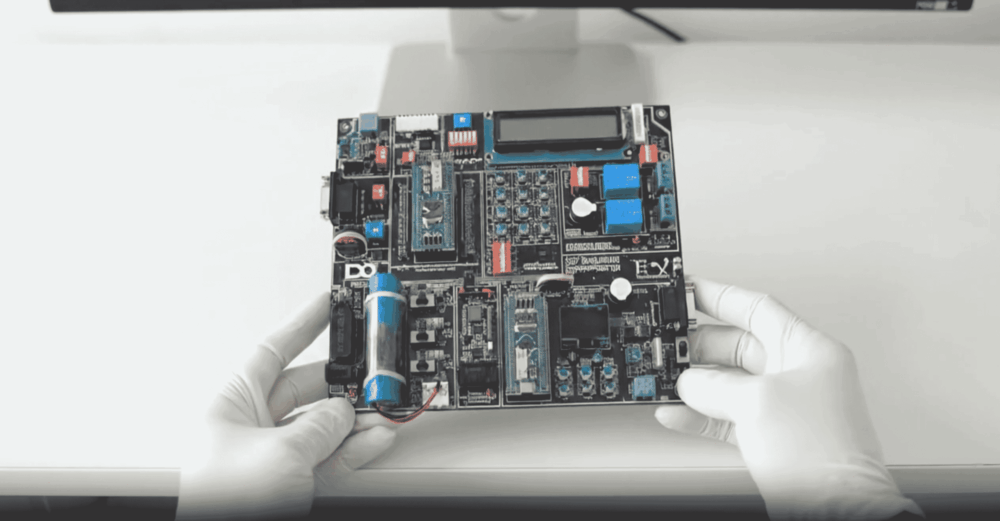
Lightweight on hardware — most modern laptops handle it. Software is free / academic-licensed.
Associated Skills
DIY Projects Included
Every project is defended in front of an industry panel and graded by our mentors. Your portfolio after this course is what gets you the interview.
End-to-end BMS design — cell-monitoring IC selection, balancing strategy, SoC/SoH algorithm, fault diagnostics. Defended in a panel review on the cohort's final week.
Model a 2-wheeler / 4-wheeler powertrain from motor to wheels, run it through MIDC + WLTP drive cycles, and predict range against the spec sheet.
Assemble a Level-1 / Level-2 EVSE on a benchtop kit — CP/PP signalling, contactor + relay logic, Type-2 connector wiring, safety lockouts.
Course Benefits
Two audiences. Two angles. Pick the one that maps to where you are today.
What this course includes
Who can take this course?
Personalised Trainer Support
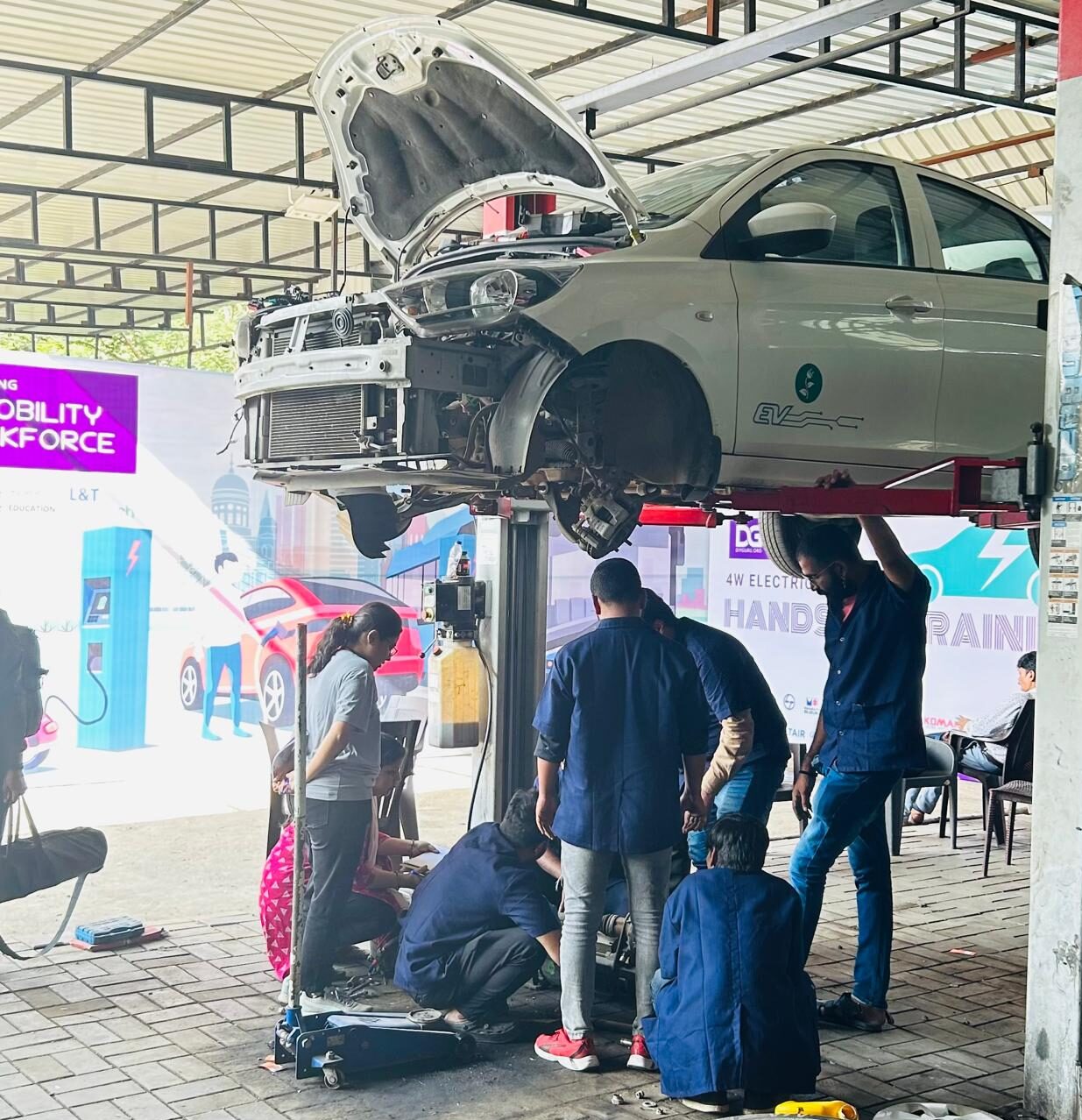
Every cohort is paired with a dedicated mentor — typically an IIT-trained EV practitioner with 6+ years of industry experience. Weekly 1:1 sessions, async doubt-clearing turnaround within 24 hours, project reviews before submission, and mock interviews tuned to the role you're targeting.
FAQ
Technical Expertise You Will Gain
Hardware competence is the differentiator. Each module pairs theory with a tooling-grounded exercise so your skill claims are demonstrably true at interview time.
Placement Network
Engineers from this course currently build at OEMs across India, Europe, North America and the Middle East.















The world's only EV-specific job network. 300+ hiring partners across India, Europe, North America and the Middle East.
Government-Certified · Industry-Endorsed · Learner-Approved
Automotive Skills Development Council — recognised by major OEMs worldwide.
National Educational Alliance for Technology — issued under AICTE's premium learning ecosystem.
Recognised by India's Ministry of Education + NSDC skilling framework — accepted globally.
Alumni Stories
Engineers from Mercedes-Benz, Cummins, Infineon, GM, Hydro One, John Deere and more.
The hardware-first approach made all the difference. Came in from a generalist electronics background; the BMS and motor-drive modules gave me concrete vocabulary I could carry into Infineon interviews.

Industry-grade depth without the academic ivory tower. The MATLAB Simulink + capstone defence prepared me for exactly the kind of cross-functional EV problems we solve at Cummins.

Started with electronics, walked into a BMS role in Germany. The applied projects + mentor reviews are what carried me through — the certifications opened the door, the depth got me hired.