emobility.academy
★ 4.8 rated by 1,500+ verified learners · curriculum reviewed by IIT Faculty · Continue learning
🏛️ IIT-Faculty Reviewed✅ ASDC · AICTE NEAT · NSDC🌍 Available worldwide
★★★★★4.8 / 5 — 1,500+ verified reviews

Certification Course in Advanced BMS and Modeling & Simulation for EVs

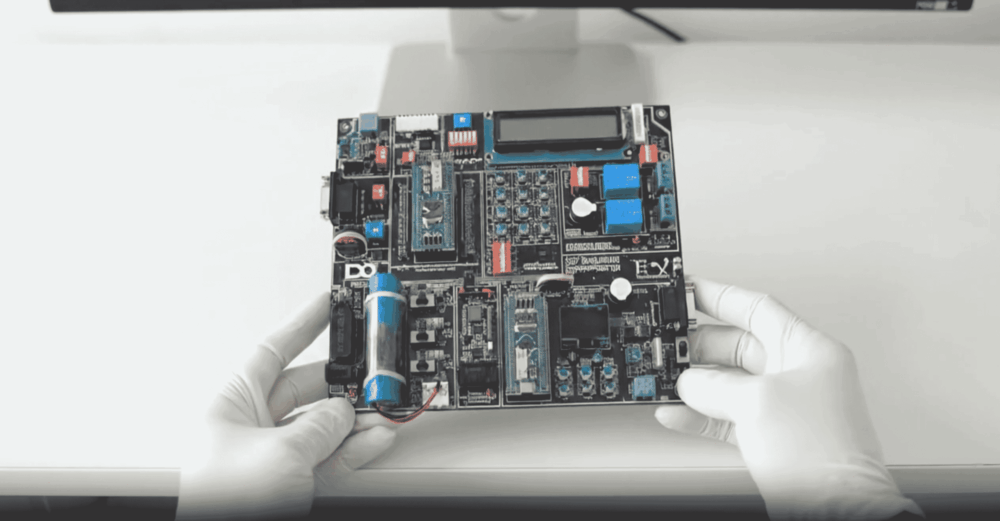
The “Certification Course in Advanced BMS and Modeling & Simulation for EVs” course provides an in-depth understanding of Battery Management Systems (BMS) with a special focus on cell balancing, thermal management, communication protocols, and advanced software and hardware configurations. Learners will explore practic
9.5+ hours
35 video lessons
12 modules
beginner
English
Recognised & Certified by
IIT Jammu I3C
ASDC
AICTE NEAT
Ministry of Education

Course Curriculum

38 lessons across 12 modules

The “Certification Course in Advanced BMS and Modeling & Simulation for EVs” course provides an in-depth understanding of Battery Management Systems (BMS) with a special focus on cell balancing, thermal management, commu

1
Module 1

Welcome to the course!

1 lesson
  1. 1

    Sign up at eMobility.careers to get exclusive EV job Opportunities!

    text

2
Module 2

Module 1: Cell Balancing in EV Battery System: Methods, Topologies, and Techniques

5 lessons
  1. 1

    Topic 1: Introduction to Cell Balancing - Key Concepts, Topologies, and Its Importance for EV Batteries

    video

  2. 2

    Topic 2: Significance of Cell Balancing Technology in EV Battery Systems

    video

  3. 3

    Topic 3: How Battery Balancing Works - Causes of SOC Imbalance & Active vs. Passive Methods

    video

  4. 4

    Topic 4: Active Cell Balancing Techniques Part 1- Direct Transformer Based & Switch Matrix Plus Transformer Approaches

    video

  5. 5

    Topic 5: Active Cell Balancing Techniques Part 2 - Buck-Boost, Comparisons, & Closed-Loop Control Switch

    video

3
Module 3

Module 2: Battery Cooling Systems: Benefits, Cooling Methods, and Advanced Liquid Solutions

3 lessons
  1. 1

    Topic 1: Battery Cooling Systems Part 1- Benefits and Air & Liquid Cooling Methods

    video

  2. 2

    Topic 2: Battery Cooling Systems Part 2- PCM, Active & Passive Liquid Cooling, and Contact Methods

    video

  3. 3

    Topic 3: Battery Liquid Cooling System - A Superior Thermal Management Solution for EVs

    video

4
Module 4

Module 3: Comprehensive Guide to BMS Communication Protocols

6 lessons
  1. 1

    Topic 1: Understanding SOC & SOH - Key Parameters in BMS

    video

  2. 2

    Topic 2: Exploring BMS Functions & Communication Protocols in BMS - TTL Overview

    video

  3. 3

    Topic 3: Understanding RS232 Communication Protocol

    video

  4. 4

    Topic 4: Understanding RS485 and CAN Communication Protocols

    video

  5. 5

    Topic 5: Understanding CAN Bus and UART Protocol & UART Implementation Architecture in BMS

    video

  6. 6

    Topic 6: Understanding RS485 Implementation Architecture in Inverter BMS and TCP & Isolated SPI Protocols

    video

5
Module 5

Module 4: Wired and Wireless BMS Communication Systems - Architecture, Components, & Protocols

4 lessons
  1. 1

    Topic 1: Introduction to Wired & Wireless BMS Communication

    video

  2. 2

    Topic 2: Understanding the Basic Wired BMS Architecture, Its Components, & Communication Mechanism

    video

  3. 3

    Topic 3: Exploring the Advanced Wired BMS Architecture, Its Components, & Communication Mechanism

    video

  4. 4

    Topic 4: Comprehensive Overview of Wireless BMS Communication, Architecture, & Protocols

    video

6
Module 6

Module 5: BMS Hardware Configurations and Components

4 lessons
  1. 1

    Topic 1: Understanding BMS Hardware Topology - Centralized & Decentralized (Primary-Secondary) System

    video

  2. 2

    Topic 2: BMS Hardware Interconnections Explained and Design Considerations

    video

  3. 3

    Topic 3: Designing a BMS System: AFE, MCU, & Fuel Gauge Components

    video

  4. 4

    Topic 4: Understanding Internal & External Cell Balancing in BMS & Other Key BMS Components

    video

7
Module 7

Module 6: BMS Software Systems and Key Algorithms

2 lessons
  1. 1

    Topic 1: BMS Cell Balancer and Introduction to BMS Software System

    video

  2. 2

    Topic 2: Exploring Key BMS Software Algorithms – From State Estimation, Charge-Discharge to Fault Diagnosis

    video

8
Module 8

Module 7: Advanced Battery Analytics & Energy Management with ML, IoT & Cloud Computing

3 lessons
  1. 1

    Topic 1: The Role of Machine Learning in Advanced Battery Life Cycle

    video

  2. 2

    Topic 2: Exploring IoT & Cloud Computing Algorithms in BMS

    video

  3. 3

    Topic 3: Machine Learning Approaches in BMS & Introduction to Digital Twin Concept

    video

9
Module 9

Module 8: Advanced Cell Modeling with MATLAB/Simulink for Li-Ion Cell

3 lessons
  1. 1

    Topic 1: Cell Modeling Part 1- Creating SOC & OCV Estimation Models

    video

  2. 2

    Topic 2: Cell Modeling Part 2- Creating Resistance & Power (R & P), Capacitance (C), and Temperature Estimation Models

    video

  3. 3

    Topic 3: Cell Modeling Part 3- Creating Terminal Voltage Estimation Model & Complete Battery Cell Simulation

    video

10
Module 10

Module 9: SOC Estimation Using Coulomb Counting & Kalman Filter Algorithms in MATLAB

3 lessons
  1. 1

    Topic 1: SOC Estimation Using Columb Counting Method

    video

  2. 2

    Topic 2: SOC Estimation Using Kalman Filter Algorithm Part 1

    video

  3. 3

    Topic 3: SOC Estimation Using Kalman Filter Algorithm Part 2

    video

11
Module 11

Module 10: Modeling Battery Management Systems (BMS) with MATLAB

2 lessons
  1. 1

    Topic 1: BMS Discharge Modeling - Part 1

    video

  2. 2

    Topic 2: BMS Discharge Modelling - Part 2

    video

12
Module 12

DIY Projects:

2 lessons
  1. 1

    Project: Modeling and State of Charge Estimation of a Li-ion Battery Cell using MATLAB and Simulink

    assignment

  2. 2

    Congratulations on Successfully Completing the Course!

    text

Earn a certificate

Add this credential to your resume — and watch employers ask about it

Every completing learner receives a joint certificate signed by three accrediting bodies — ASDC (Government of India), AICTE NEAT, and IIT Jammu I3C. The certificate carries a public verification code recruiters can validate in seconds via emobility.careers.
  • Government-recognised by Ministry of Education + NSDC
  • Validated globally by automotive OEMs and Tier-1 suppliers
  • Public verification URL — every recruiter can check authenticity
  • Issued within 14 days of capstone-project approval
Sample emobility.academy certificate

System Requirements

Hardware & software you'll need

Lightweight on hardware — most modern laptops handle it. Software is free / academic-licensed.

Hardware

  • 8 GB+ RAM (16 GB recommended for MATLAB Simulink)
  • Quad-core processor (Intel i5 / AMD Ryzen 5 or newer)
  • 8 GB+ free disk space for project files and simulation outputs
  • Stable internet connection (5 Mbps+) for live sessions and Bunny video streaming

Software

  • MATLAB R2018a or later (free academic licence works)
  • Simulink + Simscape (included in the academic MATLAB bundle)
  • Arduino IDE or STM32CubeIDE for embedded sessions
  • Optional: SolidWorks / Fusion 360 for 3D module visualisation

Associated Skills

What you'll be able to put on your résumé

Battery ModelingBMS DesignCell ChemistryMATLAB SimulinkEmbedded CCAN ProtocolPowertrain IntegrationThermal ManagementEV Safety (HV)Drive Cycle AnalysisState-of-Charge EstimationVehicle Dynamics

DIY Projects Included

Hardware-grounded projects in your portfolio

Every project is defended in front of an industry panel and graded by our mentors. Your portfolio after this course is what gets you the interview.

🔋
Project 01

Design a Complete Battery Management System

End-to-end BMS design — cell-monitoring IC selection, balancing strategy, SoC/SoH algorithm, fault diagnostics. Defended in a panel review on the cohort's final week.

⚙️
Project 02

Simulate a Full EV Powertrain in MATLAB Simulink

Model a 2-wheeler / 4-wheeler powertrain from motor to wheels, run it through MIDC + WLTP drive cycles, and predict range against the spec sheet.

🔌
Project 03

Build a Working EVSE Prototype

Assemble a Level-1 / Level-2 EVSE on a benchtop kit — CP/PP signalling, contactor + relay logic, Type-2 connector wiring, safety lockouts.

Course Benefits

What you'll get out of it

Two audiences. Two angles. Pick the one that maps to where you are today.

For Working Professionals

  • Production-Grade Vocabulary
    Walk into BMS / powertrain / charging interviews speaking the same language as Bosch, Tata, Mercedes-Benz and Ola engineering leads.
  • Tool Proficiency Recruiters Test For
    MATLAB Simulink, Ansys, Altair, STM32CubeIDE — the exact tools enterprise engineering interviews probe.
  • Industry-Aligned Capstone
    Defend a real EV-system project in front of an industry panel. The deliverable doubles as your portfolio.
  • Direct OEM Network
    1:1 intros into our 300+ hiring-partner network across India, Europe and North America via emobility.careers.
  • Cross-Functional Reach
    Equally relevant to mechanical, electrical, embedded, software and product professionals — the EV stack is genuinely cross-domain.

For Students & Freshers

  • Foundational Depth
    From cell chemistry to vehicle dynamics — the same fundamentals taught in IIT EV labs, delivered remotely.
  • Hands-On Hardware Kit
    Ships worldwide. Real motors, BMS boards, controllers. You touch the hardware your résumé references.
  • Industry-Recognised Credentials
    ASDC + AICTE NEAT + IIT Jammu I3C joint certificates open doors automatic for freshers and B.Tech candidates.
  • Live IIT-Faculty Sessions
    Weekend sessions with IIT professors and industry trainers — academic rigour you can't get from pre-recorded courses.
  • Capstone Portfolio Piece
    A defendable project at graduation — exactly what placement cells and recruiters look for first.

What this course includes

Everything you get when you enrol

  • 10 Modules.
  • 35 Lectures.
  • 9.447 hours of Video Content.
  • 1 Project Assignment.
  • Certification of Completion.

Who can take this course?

If any of these sound like you — you'll thrive here

  • B.E. / B.Tech students in any branch (Mechanical, Electrical, ECE, CSE, Automobile)
  • Diploma + ITI holders looking to upskill into EV roles
  • Working professionals from ICE auto / power-electronics / semiconductor
  • MBA / business professionals entering EV product, sales, or strategy
  • International learners — programme is English-only and timezone-friendly (recordings + live)
  • Entrepreneurs building EV products and looking for technical co-founder-grade depth

Personalised Trainer Support

One mentor. One cohort. Your career, supported end-to-end.

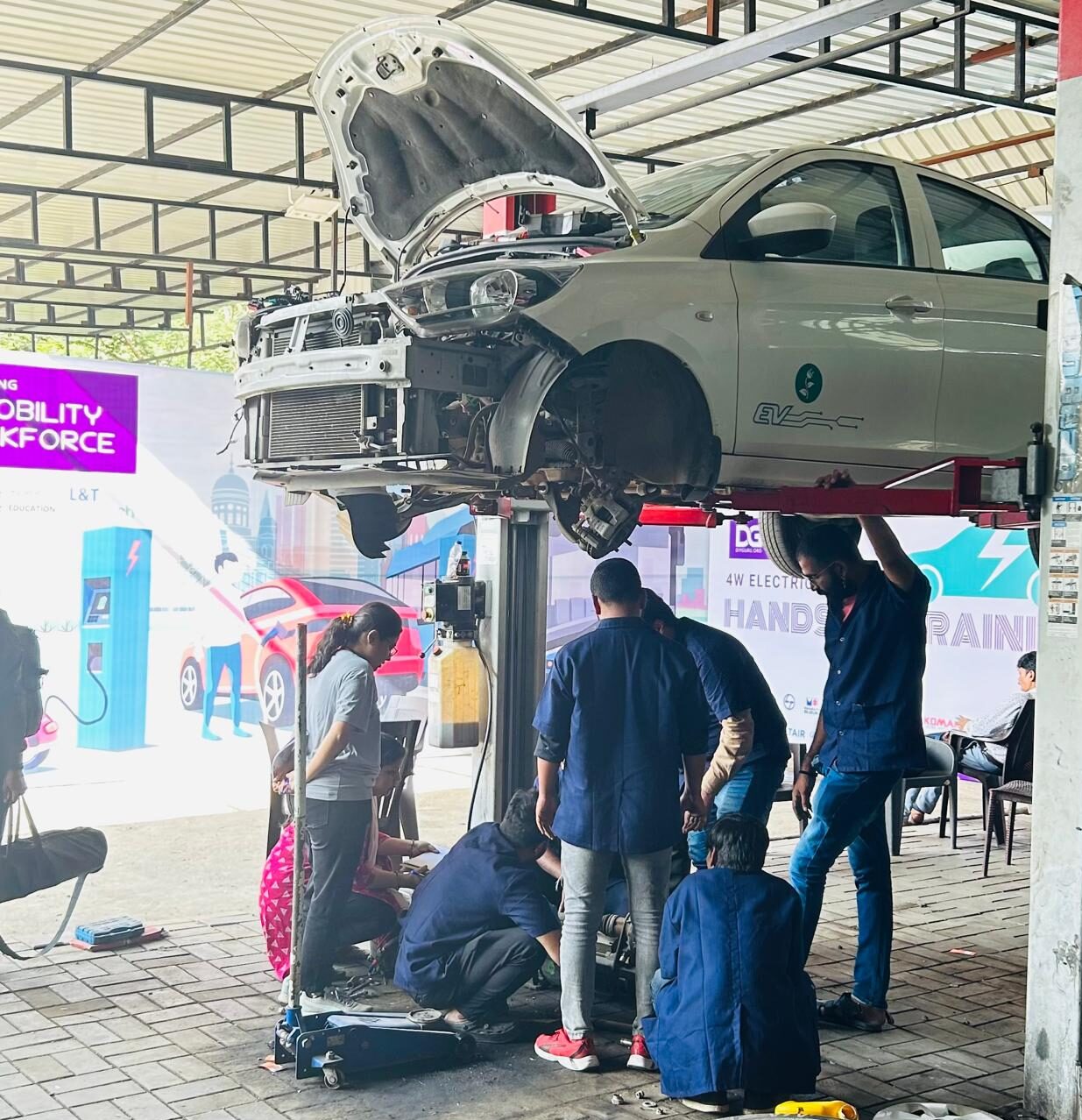
DIYguru trainer working with learners

Every cohort is paired with a dedicated mentor — typically an IIT-trained EV practitioner with 6+ years of industry experience. Weekly 1:1 sessions, async doubt-clearing turnaround within 24 hours, project reviews before submission, and mock interviews tuned to the role you're targeting.

  • Weekly 1:1 mentor calls (30 min, recorded for replay)
  • Async doubt clearing on the cohort forum — <24 hr SLA
  • Pre-submission project reviews + capstone defence prep
  • Mock interviews tuned to your target role + employer
  • Direct mentor intros to alumni at your target company

FAQ

Frequently asked questions

Who is this course for?
Engineering students (B.E./B.Tech, any branch), Diploma + ITI holders, working professionals from ICE auto / power electronics / semiconductor, MBA / business professionals entering EV, international learners, and entrepreneurs. No prior EV experience required.
Will I get hands-on hardware experience?
Yes. A DIY hardware kit ships to your address worldwide — real motors, BMS boards, controllers, and diagnostic tools. Optional physical lab sessions at our Delhi and Bengaluru campuses for India-based learners.
What certification will I receive?
On completion you receive a joint certificate carrying ASDC (Govt of India), AICTE NEAT, and IIT Jammu I3C recognition. The same credential is accepted by automotive OEMs and Tier-1 suppliers globally.
How is the course delivered?
Live online classes (weekend) + lifetime-access recordings + DIY hardware kit + 1:1 mentor sessions weekly + capstone project with industry-panel defence. English-only delivery; timezone-friendly via async replay.
What career outcomes can I expect?
Average package across alumni cohorts is approximately ₹8.4 LPA in India and $55K–$95K in international markets. Top placements go up to ₹18 LPA / $130K for BMS firmware and propulsion-controls roles.
How does placement support work?
Dedicated placement via emobility.careers — an EV-only job network with 300+ hiring partners across India, Europe, North America and the Middle East. Includes resume reviews, mock interviews, and 1:1 mentor introductions to specific employers.
What if I get stuck?
Weekly 1:1 mentor slots, active community forum with instructors, and async doubt-clearing turnaround within 24 hours. The personalised trainer support portal is included with every cohort — not an upsell.

Technical Expertise You Will Gain

By the end of this course, you'll design + defend a complete EV system

Hardware competence is the differentiator. Each module pairs theory with a tooling-grounded exercise so your skill claims are demonstrably true at interview time.

Key Job Roles

  • Battery Engineer
  • BMS Firmware Developer
  • Powertrain Engineer
  • EV Design Engineer
  • Charging Infrastructure Specialist
  • Test / Validation Engineer

Skill Sets

  • Battery pack architecture + thermal management
  • BMS algorithms (SoC, SoH, cell balancing)
  • Power electronics + motor-drive control
  • MATLAB Simulink + Simscape simulation
  • Embedded firmware development on STM32 / Arduino
  • EV safety + HV diagnostics

Competitive Hiring Across

  • Bosch · Tata · Mahindra · Ola · Ather (India)
  • Mercedes-Benz · Daimler · BMW (Germany)
  • GM · Tesla suppliers · Cummins (US)
  • Hydro One · Magna (Canada)
  • Infineon · STMicroelectronics (Europe)
  • John Deere · L&T · Maruti Suzuki

Placement Network

Our 50,000+ alumni work at

Engineers from this course currently build at OEMs across India, Europe, North America and the Middle East.


Hiring partner
Hiring partner
Hiring partner
Hiring partner
Hiring partner
Hiring partner
Hiring partner
Hiring partner
Hiring partner
Hiring partner
Hiring partner
Hiring partner
Hiring partner
Hiring partner
Hiring partner
Placement powered by
eMobility.careers

The world's only EV-specific job network. 300+ hiring partners across India, Europe, North America and the Middle East.

Government-Certified · Industry-Endorsed · Learner-Approved

Globally recognised credentials

ASDC (Govt of India)

ASDC (Govt of India)

Automotive Skills Development Council — recognised by major OEMs worldwide.

AICTE NEAT

AICTE NEAT

National Educational Alliance for Technology — issued under AICTE's premium learning ecosystem.

Ministry of Education

Ministry of Education

Recognised by India's Ministry of Education + NSDC skilling framework — accepted globally.

Alumni Stories

What our 50,000+ alumni say

Engineers from Mercedes-Benz, Cummins, Infineon, GM, Hydro One, John Deere and more.

The hardware-first approach made all the difference. Came in from a generalist electronics background; the BMS and motor-drive modules gave me concrete vocabulary I could carry into Infineon interviews.

Souvik Hazra
Souvik Hazra
Senior Manager · Infineon Technologies

Industry-grade depth without the academic ivory tower. The MATLAB Simulink + capstone defence prepared me for exactly the kind of cross-functional EV problems we solve at Cummins.

Sharad Yeola
Sharad Yeola
Application Controls Lead · Cummins Inc.

Started with electronics, walked into a BMS role in Germany. The applied projects + mentor reviews are what carried me through — the certifications opened the door, the depth got me hired.

Jagatjit Barik
Jagatjit Barik
Sr. R&D Engineer (BMS xEV) · Mercedes-Benz

Ready to launch your EV career?

Lifetime access · government-recognised certificate · DIY kit shipped worldwide · weekly 1:1 mentor sessions · 300+ hiring partners.

Accreditations

Programs Recognised by Govt. Bodies & Industries

ASDC
AICTE NEAT
Ministry of Education
SIMOPS Saudi
DSD Malaysia
UK Government
UACH
Tata Technologies
ADYPU
UDYOGA Karnataka
Ola Mobility Institute